
The Growing Role of AI in Pharmacovigilance
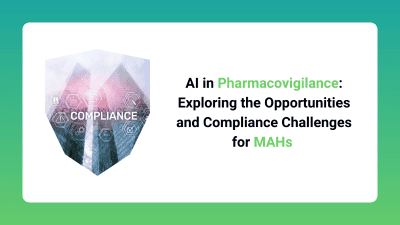
Artificial intelligence (AI) is rapidly transforming pharmacovigilance (PV), offering Marketing Authorisation Holders (MAHs) new ways to manage safety data, detect signals, and streamline reporting processes. AI in pharmacovigilance provides unprecedented efficiency, predictive insights, and scalability. However, this innovation also brings regulatory and ethical challenges that MAHs must address to remain compliant in a highly regulated environment.
Opportunities Offered by AI in Pharmacovigilance
Accelerated Case Processing
AI algorithms can automatically extract information from adverse event reports, literature, and electronic health records, drastically reducing manual case entry and review times.
Enhanced Signal Detection
Machine learning models can identify emerging safety signals from large datasets faster than traditional manual methods, allowing MAHs to take proactive risk management measures.
Predictive Risk Assessment
By analysing historical safety data and trends, AI can predict potential safety issues, enabling MAHs to mitigate risks before they escalate.
Improved Data Quality and Consistency
AI reduces human error in repetitive tasks, ensuring that data captured and reported is accurate, consistent, and compliant with regulatory standards.
Compliance Challenges with AI in Pharmacovigilance
While AI offers significant benefits, MAHs must navigate several compliance considerations:
Regulatory Accountability
Regulators emphasise that MAHs remain responsible for all PV decisions, even when AI supports or automates processes. Effective AI in pharmacovigilance requires clear documentation, validation, and traceability.
Algorithm Transparency and Explainability
Regulatory bodies expect AI outputs to be explainable. MAHs must ensure that machine learning models provide understandable rationale for decisions, particularly for case classification and signal detection.
Data Privacy and Security
AI systems rely on large datasets that may contain sensitive patient information. Compliance with GDPR, HIPAA, and other local regulations is critical to avoid breaches and penalties.
Continuous Validation and Monitoring
AI models must be monitored over time to ensure consistent performance. Updates or changes in algorithms require re-validation to maintain regulatory alignment.
Best Practices for Implementing AI in Pharmacovigilance
Maintain Human Oversight
AI should assist, not replace, qualified PV professionals. Human review ensures critical cases are evaluated accurately and in line with regulatory expectations.
Establish Clear SOPs
Define standard operating procedures for AI-supported workflows, including case handling, signal detection, and risk management protocols.
Leverage Advanced Analytics Dashboards
Integrate AI outputs with dashboards to track performance metrics, processing timelines, and regulatory adherence.
Conduct Regular Audits and Validation
Ensure AI systems are routinely tested, documented, and validated to provide audit-ready evidence of compliance.
Ethical Considerations for AI in Pharmacovigilance
Ethical use of AI in PV requires:
Bias Mitigation: Algorithms must be trained on diverse datasets to avoid biased conclusions.
Transparency: Decisions made by AI should be documented and interpretable.
Patient Safety Priority: AI must augment PV processes without compromising safety assessments.
By addressing ethical and compliance aspects, MAHs can harness AI’s power while maintaining regulatory confidence.
Unlocking the Potential of AI in Pharmacovigilance
AI in pharmacovigilance is no longer a future concept — it is actively reshaping how MAHs manage global safety operations. By automating routine tasks, enhancing signal detection, and providing predictive insights, AI enables faster, smarter, and more efficient PV workflows.
At the same time, regulatory compliance, human oversight, and ethical governance remain non-negotiable. MAHs that successfully integrate AI into their PV systems can improve efficiency, reduce processing times, and proactively manage safety risks — all while maintaining alignment with global regulatory expectations.