
The Role of Local Affiliates in Pharmacovigilance
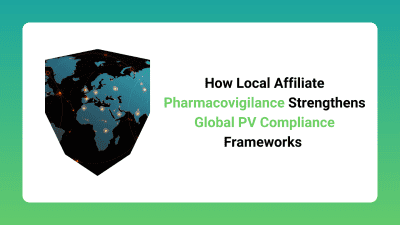
For Marketing Authorisation Holders (MAHs) operating globally, compliance with diverse regional regulations is a significant challenge. Local affiliates serve as the frontline of safety reporting and regulatory compliance. Effective local affiliate pharmacovigilance ensures that adverse event data, literature monitoring, and safety signals are captured and communicated in alignment with both local and global standards. By empowering local affiliates, MAHs can strengthen their overall pharmacovigilance (PV) framework and maintain regulatory confidence worldwide.
Why Local Affiliate Pharmacovigilance Matters for Global Compliance
Local affiliates play a critical role in translating local safety data into global PV reporting. Their contribution ensures that:
Regulatory Timelines Are Met: Adverse events are reported promptly according to regional requirements.
Data Completeness and Accuracy: Local affiliates collect case-specific details that might otherwise be missed, improving global safety data quality.
Signal Detection Is Regionally Relevant: Local trends and emerging risks are identified, contributing to global signal evaluation.
Inspection Readiness Is Maintained: Properly trained affiliates ensure audit-ready documentation and compliance evidence.
Without robust local affiliate pharmacovigilance, MAHs risk delays in reporting, incomplete safety data, and non-compliance with both local and international regulators.
Key Responsibilities of Local Affiliate Pharmacovigilance
Adverse Event Reporting
Local affiliates are responsible for capturing adverse events from healthcare providers, patients, and other stakeholders. They ensure cases are documented according to local regulatory requirements and submitted to the central PV team efficiently.
Literature Monitoring
Affiliates track local medical literature for safety information relevant to marketed products. This local intelligence feeds into global signal detection efforts.
Supporting Signal Detection
Regional data is crucial for detecting signals that may only be observable within specific populations or geographies. Local affiliates ensure that these signals are reported to central PV teams promptly.
Training and Awareness
Affiliates educate healthcare providers and staff on PV reporting obligations, ensuring compliance with both local and global regulatory requirements.
Best Practices for Strengthening Local Affiliate Pharmacovigilance
Standardised Procedures Across Regions
Provide affiliates with clear SOPs for case reporting, literature screening, and escalation procedures. Standardisation ensures consistency and compliance across all markets.
Integration with Global PV Systems
Affiliates should have access to cloud-based PV platforms or case management systems to submit data in real time, enabling global oversight.
Regular Training and Support
Ongoing training ensures affiliates remain up-to-date with local and global regulations, data privacy requirements, and emerging PV trends.
Monitoring and KPIs
Track performance metrics such as case reporting timelines, completeness, and query resolution to ensure affiliates meet global PV expectations.
Challenges in Local Affiliate Pharmacovigilance
Regulatory Variability: Each country has unique PV obligations, making compliance complex.
Resource Limitations: Smaller affiliates may have limited staff or technological support.
Data Quality Issues: Inconsistent reporting can compromise global PV decision-making.
Communication Gaps: Delays or miscommunication between affiliates and central PV teams can affect compliance.
Addressing these challenges requires structured processes, robust technology, and strong central oversight.
Integrating Local Affiliate Pharmacovigilance for Global Success
Local affiliate pharmacovigilance is essential for maintaining a compliant, efficient, and proactive global PV framework. By empowering affiliates with training, technology, and clear procedures, MAHs can capture accurate safety data, detect regional signals, and meet regulatory obligations worldwide.
A well-integrated local affiliate network not only ensures compliance but also strengthens patient safety and supports a culture of vigilance across all markets. For MAHs, investing in robust local affiliate pharmacovigilance is an investment in global PV excellence.